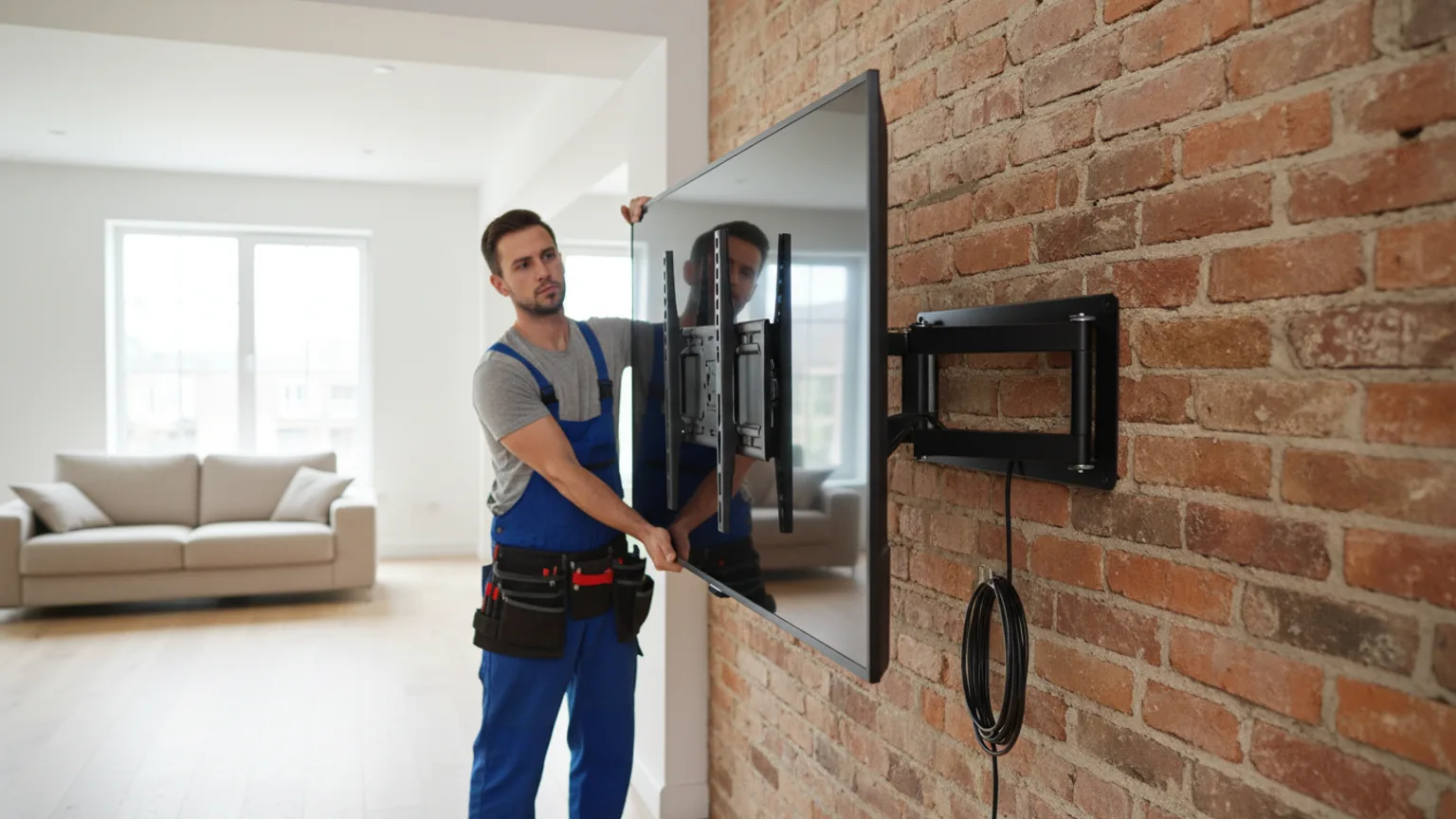
Yes — a correctly wall-mounted TV is significantly safer than a TV on a stand. Wall mounting eliminates tip-over risk, removes floor cables, and places the TV at an optimal viewing height. The question is not whether wall mounting is safe in principle — it is whether the specific installation is done correctly. Here is what makes the difference.
Wall mounting vs TV stand: the safety comparison
A TV on a stand has one fundamental vulnerability: it can fall forward. A 55-inch TV weighs 18–25kg. When it tips, it falls 80–120cm to the floor with significant force. Furniture tip-over is a recognised cause of injuries in UK homes, with young children most at risk from TV-related incidents.
A wall-mounted TV physically cannot fall forward. The bracket holds the TV against the wall — the only direction of possible failure is backward into the wall, which a bracket correctly attached to a load-bearing substrate will not do. Wall mounting also eliminates the cable trip hazard that is a contributing factor in many TV stand falls.
For families with young children, wall mounting is not just an aesthetic choice — it is a meaningful safety improvement. Our child safety TV mounting page covers this in more detail.
What makes a wall-mounted TV safe
Four things determine whether a wall-mounted TV stays up permanently:
- The right fixing type for the wall — Solid masonry needs Rawlbolt anchors or heavy-duty nylon plugs. Plasterboard needs cavity fixings (Grip-It, toggle bolts) rated for the TV weight. Using the wrong fixing type is the most common cause of bracket failure.
- Fixings into the substrate, not just the plaster — Plaster has very low tensile strength. Fixings must pass through the plaster and anchor in the brick, block, timber, or metal stud behind it. Fixings that stop in the plaster layer will eventually pull out under sustained load.
- A bracket rated for the TV weight with margin — The bracket's stated load rating should exceed the TV's weight by at least 50%. A 25kg TV should not be on a bracket rated to 25kg — headroom for safety, vibration, and movement over time matters.
- Correctly tightened fixings — Both the wall fixings and the VESA bolts on the TV need to be properly torqued. Undertightened screws work progressively loose through vibration from TV audio, particularly with bass-heavy sound systems.
What makes a wall-mounted TV unsafe
In our experience repairing and remounting TVs across London and the South East, the same mistakes appear repeatedly:
- Standard plastic plugs in plasterboard — The most common failure. Standard wall plugs are designed for solid walls. In plasterboard, they can pull straight through under the weight of a large TV, particularly when combined with the downward moment of a TV hanging at an angle.
- Drilling into plaster only — Particularly common in Victorian properties and dot-and-dab walls. The fixing looks secure initially but the plaster gradually cracks around it under sustained load.
- Full-motion bracket on plasterboard — A full-motion arm creates significant lateral load on the fixings when extended, far exceeding what a static flat bracket applies. Using standard cavity anchors with a heavy full-motion bracket on plasterboard is a common slow-failure scenario.
- Cheap brackets with inadequate load ratings — Very low-cost brackets from online marketplaces sometimes have load ratings that are aspirational rather than tested. Use brackets from established brands (Vogels, Sanus, Invision, AVF) with independently verified load ratings.
Is it safe to mount a TV on plasterboard specifically?
Yes — with the correct fixings. The misconception that plasterboard cannot hold a TV comes from the frequent misuse of the wrong anchors. Properly specified cavity fixings are strong. A correctly installed Grip-It M6 anchor in sound 12.5mm plasterboard has a published pull-out rating well in excess of any domestic TV weight, and a four-anchor bracket multiplies that further. In practice the rated capacity is far above what any domestic TV installation requires.
The key qualifiers are “correctly installed” and “sound plasterboard.” Old, crumbling, or previously damaged plasterboard has lower structural integrity. Our plasterboard TV mounting guide covers how to assess board condition and select the right anchor type.
The one safety step most DIYers skip
Scanning for hidden pipes and electrical cables before drilling is the safety step most frequently skipped in DIY installations. Drilling into a live electrical cable is dangerous — it can cause electric shock and potentially fire. Hitting a water pipe causes flooding and costly property damage.
A combined pipe and cable detector costs £20–40 from any DIY store and takes three minutes to sweep the drill zone. On our installations, this scan is the first thing done after the wall position is agreed and forms part of our standard process.
Professional installation — what it actually means for safety
A professional TV mounting service gives you: the right fixings for your exact wall type, a pipe and cable scan before drilling, a load-tested bracket on a correctly prepared substrate, and a written record of the installation. For most homeowners, professional mounting is straightforward peace of mind — especially for large TVs, complex wall types, or family homes. See our current pricing.
Get a free estimate from Mount TV → We cover London and the South East, 7 days a week.