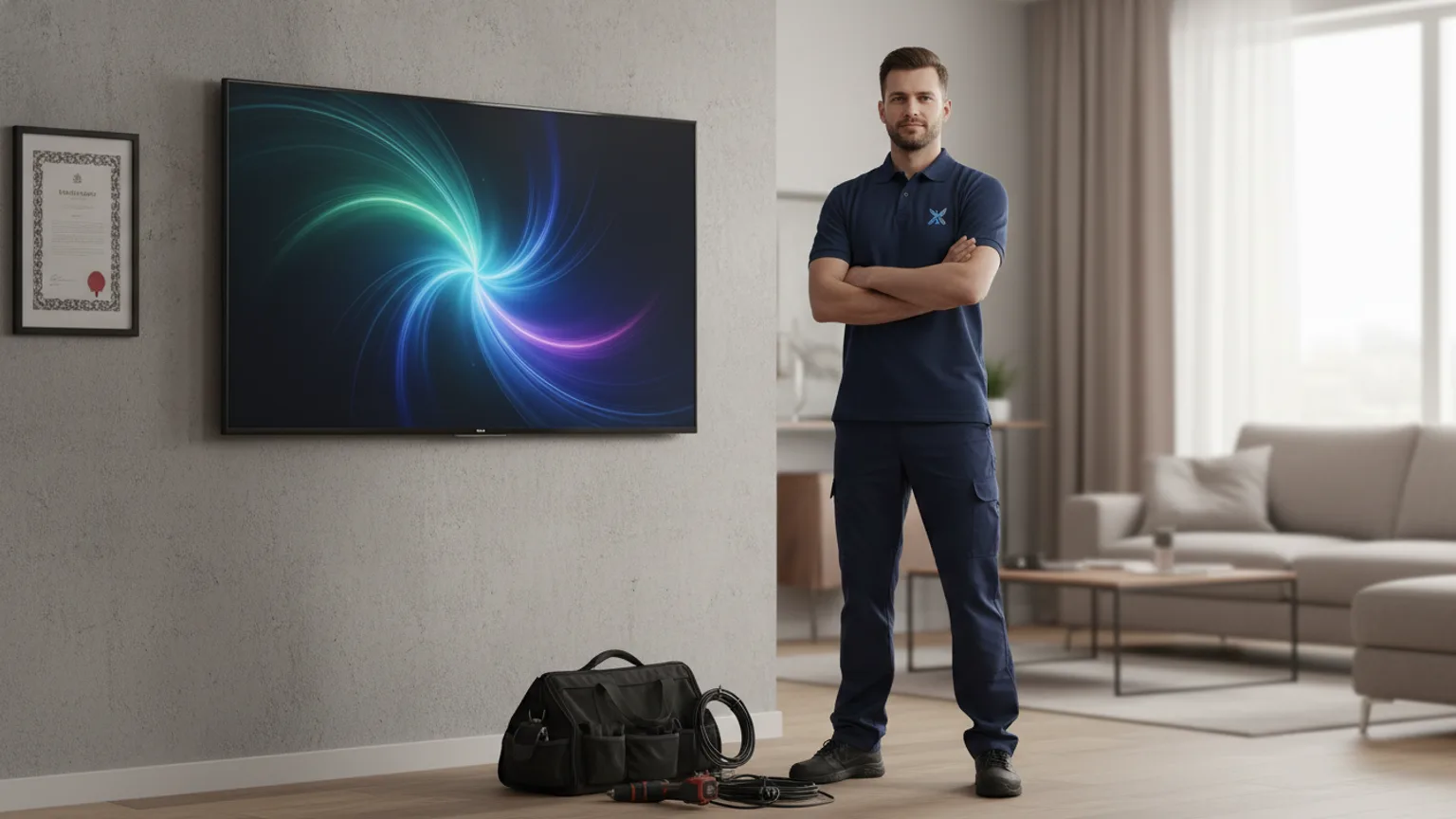
When you hire someone to mount your TV, their public liability insurance does not just protect them — it protects you. If something goes wrong during the installation and the installer is uninsured, your only route to recovering costs is a small claims court process against an individual who may or may not have the means to pay. Understanding what insurance means in this context takes about five minutes and could save you a significant headache.
What public liability insurance actually covers
Public liability insurance (PLI) covers damage to third-party property — in this context, your home — caused by the work being carried out. If an installer drills into a hidden water pipe and causes a flood, PLI covers the remediation. If a TV bracket fails during installation and the TV damages your floor or the wall below, PLI covers the repair or replacement.
PLI is not the same as the installer's vehicle insurance or their tools cover. It specifically covers damage or injury arising from their professional work in your property. A standard residential trades PLI policy covers work in homes — you want a policy that is current and active on the date of your installation.
Why this matters more than most people realise
Most TV mounting jobs go perfectly well. But edge cases are real: hidden pipes, electrical cables in unexpected positions, plaster that behaves differently under a drill than expected. These situations are rare — but when they happen, the cost can be significant.
A household insurance claim for water damage from a single pipe can run to several thousand pounds once you include drying, replastering, redecorating, and any flooring affected. If the person who caused that damage is uninsured and disputes liability, you are dealing with that cost directly. An insured professional means there is a funded route to recovery that does not require legal action.
For renters, the stakes are higher
In a rented property, any damage caused during a TV installation comes from your deposit — and if it exceeds the deposit, potentially from additional legal pursuit by your landlord. A professional, insured installation does two things: it minimises the risk of damage in the first place (correct equipment, correct technique), and it provides a clear liability route if something unexpected does happen.
If you have a landlord who has given permission to mount a TV, showing them that the installer carries professional public liability insurance often makes a real difference to whether permission is granted. Many landlords are reassured by it. It is a straightforward assurance that their property is protected.
What to ask before hiring a TV installer
Before any work begins, ask for:
- Current certificate of insurance — the document showing active PLI with a policy period that covers your installation date. A reputable trades policy is what you should expect.
- Written confirmation of their guarantee — how long does the installation guarantee last? What does it cover? A reputable installer will provide this without hesitation.
- Their registered business name or trading name — you need to be able to identify them formally if a claim is ever needed.
Mount TV carries comprehensive public liability insurance. Our insurance certificate is available on request before any installation.
The bottom line
The key question to ask any TV installer before they start:
“Can I see your current public liability insurance certificate?”
A reputable professional answers immediately. If there is hesitation, that tells you something important. Professional TV mounting is a small price for a job done correctly, with full insurance behind it — see our current pricing.
To book Mount TV or check our insurance details before your installation, get a free estimate here or Call Us.