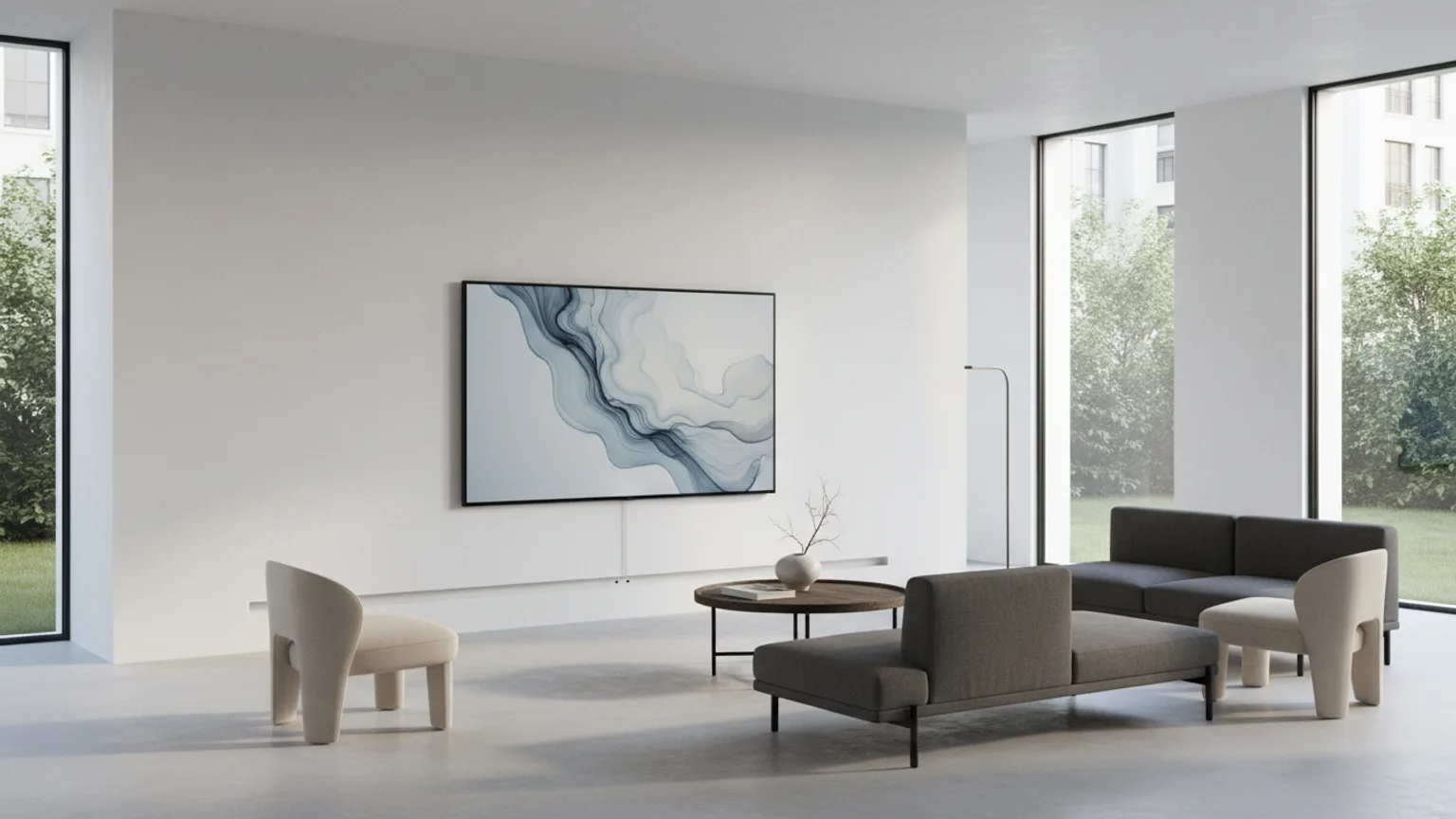
Almost any modern TV can be wall-mounted — but some are significantly better suited than others. The key factors are slim profile, sensible cable exit placement, low weight, and clean VESA integration. Here is what we look for on customer jobs, drawn from our day-to-day installation experience.
What actually makes a TV good for wall mounting
When evaluating a TV for wall mounting, ignore the picture quality specs for a moment and focus on the physical design. These are the things that make the difference between a clean, flat installation and one that looks afterthought.
1. Slim profile
A slim panel sits closer to the wall. The difference between a 60mm-deep TV and a 30mm-deep TV is significant once mounted — the slimmer version looks deliberately designed to be on a wall, the deeper one looks like a free-standing TV that someone stuck to the wall. OLED panels and Samsung's Frame TV are the current standard-bearers for slim-profile wall mounting.
2. Cable exit placement
This is the most overlooked factor. On a fixed bracket, the TV sits close to the wall with very little clearance at the back. If the TV's ports (HDMI, power, aerial) point straight backwards, getting cables in and out without damaging them or the TV is genuinely awkward. Ports that face downward or sideways are much better for wall mounting. Samsung's One Connect Box (on Frame TV and some QLED models) solves this elegantly — a single thin cable connects the TV to a separate box where all your devices plug in.
3. Weight
Lighter TVs are easier to mount, easier to handle, and place less stress on wall fixings — particularly important on plasterboard. Modern TVs have become significantly lighter over the past five years. A 65-inch TV that weighed 30kg in 2019 might weigh 20kg in 2024. Check the manufacturer's stated weight before buying a bracket.
4. Standard VESA pattern
All major brands use standard VESA mounting patterns. The pattern must match your bracket. Unusual VESA patterns (very small patterns on large screens, or proprietary patterns on some budget brands) can limit your bracket options. Samsung Frame TVs require Samsung's own No-Gap bracket for a flush fit — standard brackets will work but leave a gap.
| TV size | Typical VESA pattern | Typical weight range | Bracket category |
|---|---|---|---|
| 43" | 200×200 or 300×200 | 8–12kg | Standard |
| 50" | 300×300 or 400×300 | 11–15kg | Standard |
| 55" | 400×400 | 14–20kg | Standard |
| 65" | 400×400 or 600×400 | 18–28kg | Standard or heavy-duty |
| 75" | 600×400 or 800×400 | 25–40kg | Heavy-duty |
| 85" | 800×400 or 900×600 | 38–55kg | Heavy-duty commercial |
TV types and how they wall-mount
OLED (LG, Sony, Panasonic)
OLED panels are exceptionally slim — typically 20–30mm deep — and wall-mount beautifully. The panel itself sits very close to the wall. Cable management is the main consideration since ports are at the back. LG's Gallery Series OLEDs are specifically designed for wall mounting with a nearly flush finish. These are among the best TVs to mount from a physical design standpoint.
Samsung QLED and Neo QLED
Samsung's mid-to-high range QLEDs are well-suited to wall mounting. The One Connect Box feature on upper-tier models is a significant advantage — all devices connect to the One Connect Box, and only one thin cable runs to the TV. Cable management becomes trivial. The Frame TV takes this further with a dedicated No-Gap mount.
Samsung Frame TV
Specifically designed for wall mounting. The No-Gap Wall Mount (sold separately) brings the TV flush to the wall — under 10mm gap. Art Mode displays artwork when not in use. This is one of the most requested TVs we mount. See our Samsung Frame TV installation guide for everything you need to know.
Sony Bravia
Sony's premium Bravia range (A90K OLED, Z9K Mini-LED) are slim, well-built, and wall-mount cleanly. The Bravia Cam attaches to the top of the TV and can remain in place when wall-mounted. Cable management is straightforward on most models.
Budget brands (Hisense, TCL, Philips)
Budget TVs wall-mount fine for picture quality purposes, but the physical design often shows the price point — thicker chassis, ports pointing straight back, heavier weight for the size. They mount perfectly well with the right bracket, just with less elegance. If the TV will be seen from the front and cables will be hidden, this matters less.
Our honest recommendation
If wall mounting is a priority in your purchase decision, look for: an OLED panel (LG or Sony) or a Samsung QLED with One Connect Box, in the 55–65 inch range for most living rooms. These mount cleanly, have sensible cable management, and look genuinely designed for the wall.
Whatever TV you choose, we can mount it cleanly. But choosing a TV with wall mounting in mind will make the finished result look better — and we will thank you for it.
See our guide to the best TV wall mount brackets and our VESA compatibility guide for the next steps.