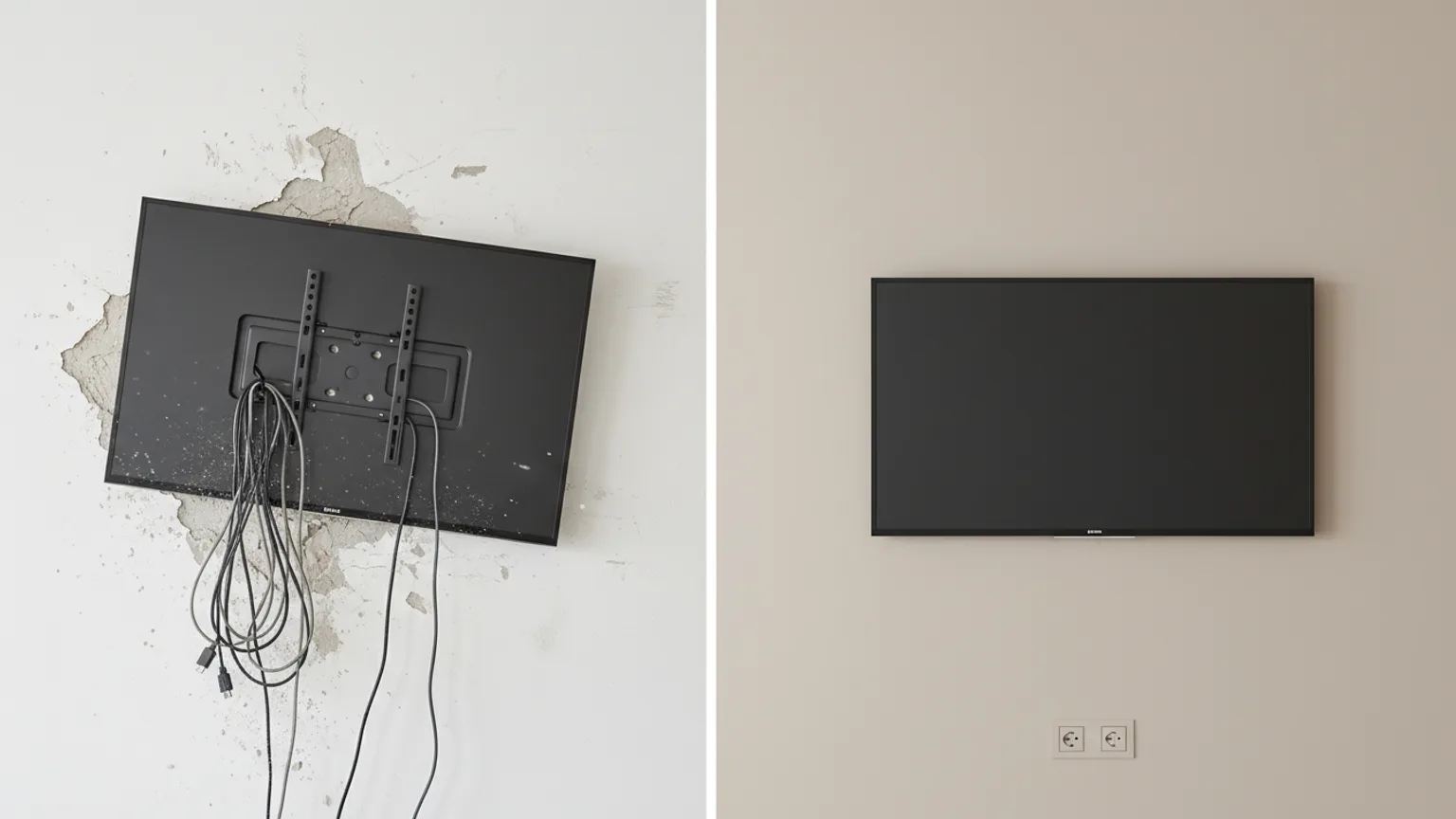
DIY TV mounting is possible on a solid brick wall with a simple bracket and basic tools. But it goes wrong more often than people expect — wrong fixings in plasterboard, hitting hidden cables, mounting too high. This is an honest look at when DIY is fine and when a professional is the smarter call.
Side-by-side comparison
| Factor | DIY | Professional |
|---|---|---|
| Cost | Bracket + fixings (varies) | See current pricing |
| Time | 1.5–4 hours (incl. research) | 45–90 minutes |
| Tools required | Drill, level, bits, plugs — must own or hire | All tools supplied |
| Wall assessment | DIY — risk of missing pipes/cables | Professional scan before drilling |
| Plasterboard fixings | Common mistake — wrong fixings used | Correct cavity fixings for weight |
| Cable management | Usually left visible or poorly managed | Trunking or behind-wall routing |
| Guarantee | None | Workmanship covered by professional indemnity |
| Insurance | None | Fully insured |
| Risk of costly mistake | Moderate to high (especially plasterboard) | Very low |
When DIY is a reasonable option
DIY mounting can work well in these specific situations:
- Solid brick wall with a straightforward fixed bracket — this is the easiest possible job. Brick is predictable, masonry plugs are reliable, and the process is well-documented.
- Small to medium TV (up to 55") — lighter screens are easier to handle alone and the weight demands on fixings are lower.
- Visible cable management — if you are not hiding cables, the job is significantly simpler.
- You have done it before — experience counts. A person who has mounted two or three TVs will make far fewer mistakes than a first-timer.
When to call a professional
These situations are where DIY attempts most often go wrong, and where calling a professional saves money and stress:
Plasterboard walls
Plasterboard is the most common wall type in modern and converted London properties — and the most common source of DIY TV mounting failures. Using standard wall plugs in plasterboard does not work. The plugs pull through under load. A 55-inch TV weighs 15–25kg. When it falls, it damages the TV, the wall, and potentially anyone nearby.
Professional installers use rated cavity fixings (Grip-It, Toggler, or similar) and locate timber studs where available. The fixing strategy depends on the specific wall construction. Getting this wrong is expensive. See our plasterboard TV mounting specialist page.
Behind-wall cable routing
Feeding cables inside the wall involves cutting access holes, fishing cables through the cavity, and fitting wall plates. This is straightforward for an experienced installer but involves real risks for a DIYer — particularly hitting existing cables or pipes. Even a small nick in an electrical cable is a serious problem.
Above-fireplace installation
Chimney breasts have unusual construction — varying brick densities, possible voids, old flue linings, and narrow cavities. The positioning requires care and the cable route is not always obvious. We mount TVs above fireplaces regularly and still assess each one carefully before drilling.
Large TVs (65"+)
Heavy TVs require two people to lift safely — one to hold the screen, one to locate it onto the bracket. This is not a one-person DIY job. Dropped or mis-mounted large-format TVs cause serious damage.
Concrete walls
Concrete requires a specific drill bit, higher drill speed, and the right masonry anchor for the load. It is harder to work with than brick and easier to get wrong.
The most common DIY mistake
Across the jobs we are called to fix after a DIY attempt, mounting too high is the single most common problem. Most people mount their TV at a height that feels right when standing in the room — which ends up being 20–30cm too high for comfortable seated viewing. The correction requires new holes, filling the originals, and rehanging the bracket. See our guide on how high to mount a TV before drilling anything.
The honest verdict
For a solid-brick wall, simple fixed bracket, and no cable hiding, DIY is reasonable for a confident person with the right tools. For everything else — plasterboard, behind-wall cables, large screens, chimney breasts, above fireplaces — a professional is faster, safer, and genuinely better value when you factor in the risk of a costly mistake.
Our standard installation includes all fixings and typically takes around 60–90 minutes. See our current pricing — for most people in London, professional mounting is the better option.